


If you’ve ever noticed your upper back feeling tight, weak, or fatigued during workouts or daily activities, your upper lats might be the problem. Strengthening your lats not only helps with posture but also gives your spine the stability it needs for everything from lifting groceries to improving your overall gym performance.
7 Upper Lat Exercises for Strength & Growth
To target your upper lats, you need exercises that emphasize a wider grip and pulling motion toward your chest rather than your waist. You’ll also want to focus on keeping your elbows flared slightly out rather than tucked in; this small adjustment changes how your lats activate. Keep this in mind as you check out these simple, effective upper lat exercises.
1) Wide-Grip Lat Pulldown
Helps with: Building upper lat thickness and back width + improving posture stability
This is how to do it:
Step 1) At the gym, find a pulldown machine that has a wide bar.
Step 2) Grip the bar a little wider than shoulder-width, keeping your palms facing forward.

Step 3) Pull the bar down to your chest, squeezing your lats to maximize the exercise.

Step 4) Slowly return to the starting position – doing around 12 reps is the standard.
→ Why? This is one of the most classic upper lat exercises and a pro builder for both strength and aesthetics.
2) Inverted Rows (Bodyweight Option)
Helps with: Upper back + lat strength without the use of machines
This is how to do it:
Step 1) Position yourself under a Smith machine, railing, or even a sturdy broomstick setup between chairs.
Step 2) Grip your chosen bar wider than shoulder-width – body straight, heels on the ground.
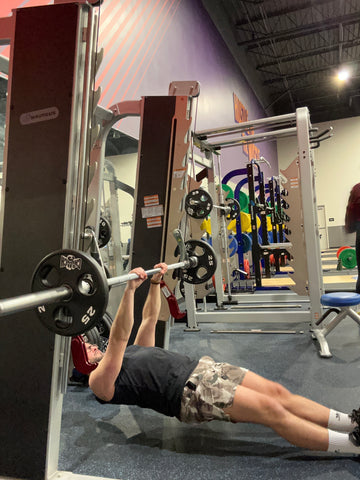
Step 3) Pull your chest toward the railing or broomstick, then lower yourself back down slowly.

→ Why? This exercise is scalable to any fitness level, strengthening both your back and lats.
3) Dumbbell Row to Chest (Upper Lat Focus)
Helps with: Direct upper lat engagement + improving your unilateral strength and balance
This is how to do it:
Step 1) Place your left knee and hand on a bench, a dumbbell in your right hand.
Step 2) Pull the dumbbell up toward your chest, keeping your elbow slightly flared.

Step 3) Lower slowly, repeating this upper lat exercise for around 12 reps on each side.
→ Why? Pulling toward the chest with the elbow out shifts emphasis from the lower lats to the upper lat fibers and mid-trapezius/rhomboids.
4) Wide Grip Pull Up
Helps with: Overall lat development
This is how to do it:
Step 1) Grip a bar wide (palms forward) with a wider-than-shoulder-width grip.
Step 2) Engage your lats, then, with precision, pull your chest up toward the bar.
Step 3) Lower with control; aim for 6 reps if you’re building strength, or go higher for endurance.
→ Why? This is a gold standard among upper lat exercises for both lat strength and back support.
5) Meadows Row
Helps with: Upper lat isolation + unilateral back growth
This is how to do it:
Step 1) Load a barbell in a landmine attachment or wedge it into a corner, positioning yourself sideways to the bar.
Step 2) With your inside hand, grip the end of the bar, using straps if you need them.
Step 3) Hinge at your hips and row the bar toward your chest, keeping your elbow flared out.
→ Why? The angle of the landmine here, combined with a chest-directed pull, can easily shift emphasis toward the upper lat fibers while also protecting your lower back.
6) Supinated Lat Pulldown
Helps with: Upper lats + biceps engagement for pulling strength
This is how to do it:
Step 1) Sit at a lat pulldown machine with a straight bar; grip underhand, shoulder-width apart.

Step 2) Lean back and pull the bar down toward your upper chest.
Step 3) Focus on driving your elbows down and slightly out while squeezing your upper lats.

→ Why? The reverse grip in this exercise allows for a stronger range of motion and helps bias upper lat activation while still engaging your arms, too.
Learn more about this exercises HERE.
7) Single-Arm Landmine Row
Helps with: Unilateral strength + correcting imbalances + upper lat recruitment
This is how to do it:
Step 1) Stand in a staggered stance next to the landmine bar, holding an end with one hand.
Step 2) Row the bar toward your upper chest, keeping your elbow out but not tucked.
Step 3) Slowly lower the bar back down using control – and repeat for each side.
→ Why? Single-arm landmine rows emphasize stability, allowing you to focus on squeezing one upper lat muscle at a time, which helps build symmetry and targeted growth.
Upper Lat Exercises: The Benefits

Here are the main benefits of adding upper lat exercises to your active routine:
→ Better Posture + Spinal Support
→ Reduced Back Pain
→ Improved Breathing + Core Stability
→ Stronger Pulling Performance
→ A More Balanced Physique
→ Better Shoulder Mobility
→ Enhanced Athletic Performance
→ Daily Life Support
Why Are Your Upper Lats So Important?

Your latissimus dorsi is the largest muscle in your back, and the upper fibers do more than just add shape to your body. Anatomically, the lats connect your spine, ribs, pelvis, and upper arm. This makes them one of the few muscles that bridge both the upper and lower body.
Research shows lats provide critical stability to the thoracic and lumbar spine, especially during heavy lifting or overhead movement. Without strong lats, other smaller muscles are forced to overcompensate, which can increase the risk of strain and pain in your mid- to upper back.
Here is a quick breakdown of your lats and how to bias each one:
→ Upper Lats: Help with shoulder adduction, extension, internal rotation, and contribute to a “V-taper” look. Best biased with wide-grip pull-ups, pulldowns, and high-to-low cable pulls.
→ Middle Lats: Assist with scapular depression/retraction and stabilize the torso. Best biased with neutral-grip pulldowns, chest-supported rows, and single-arm rows with elbows tucked.
→ Lower Lats: Drive shoulder extension, posture support, and core stabilization during heavy pulling moves. Best biased with close-grip pulldowns, straight-arm pulldowns, and rack pulls.
→ Upper vs. Middle vs. Lower Differences: Upper lats build width through vertical pulling, middle bridges width and thickness with stability, lower adds thickness and posture support.
→ Pro Tip: Angle of pull and elbow path determine which lat fibers get the most emphasis. Wide grips and overhead pulls bias the upper lats for width. Neutral or tucked elbows hit the middle lats for stability and balance, while close-grip or straight-arm movements drive lower-lat activation for thickness and posture.
More Latissimus Dorsi Resources
To learn more about your lats, check out these awesome resources:
“4 Causes of Lat Muscle Strain”
Upper Lat Exercises FAQs

What Is the Best Exercise for Upper Lats?
The best exercise for upper lats is often considered the wide-grip pull-up or wide-grip lat pulldown. Research also shows that dumbbell pullovers and straight-arm cable pulldowns are excellent complementary moves.
How to Isolate Upper Lats?
To isolate your upper lats, focus on form and small changes in angle. While it’s impossible to work your lats without also involving nearby muscles, you can prioritize your upper lats by doing these things:
→ Using a wide or neutral grip instead of a narrow one
→ Rowing toward your chest rather than your waist
→ Keeping your elbows slightly outward to shift tension higher on your lats
→ Adding straight-arm pulldowns and pullovers to reduce bicep involvement
What Trains Upper Lat?
Upper lats are trained by any pulling movement that brings your arms from overhead or in front of your body down toward your chest. Some classic examples you can try include wide-grip pull-ups, wide-grip lat pulldowns, and chest-level dumbbell rows.
Resources: